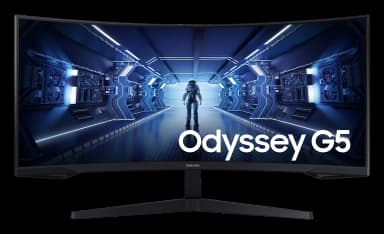
Samsung Curved Gaming Monitor With 165Hz Refresh Rate vs Samsung Odyssey Neo G9 G95NC
Samsung Odyssey Neo G9 G95NC is the better monitor for most people

Best for
- GamingSamsung Odyssey Neo G9 G95NC
- Photo and design workSamsung Odyssey Neo G9 G95NC
- Office workSamsung Odyssey Neo G9 G95NC
Head to head
- Picture quality
Samsung Odyssey Neo G9 G95NC is ahead on picture quality: brightness 420 nits against 250 nits.
- Motion and speed
All specifications
Samsung Curved Gaming Monitor With 165Hz Refresh Rate
Samsung Odyssey Neo G9 G95NC
Display
Aspect Ratio
21:9
32:9
Brightness
250 nits
420 nits
Contrast Ratio
2,500:1 (Typ.)
2,500 : 1
Curved Screen
Yes
Yes
HDR
–
Yes
Panel Type
VA
VA
Refresh Rate
–
240 Hz
Resolution
3440 x 1440
7680 x 2160
Response Time
1 ms
1 ms
Screen Size
34 in
57 in
Ports
HDMI
Yes
Yes
HDMI Ports
1
3
Build and size
Dimensions
806.6 x 380.9 x 152.7 mm
1327.5 x 429.5 x 338.4 mm
Weight
5.2 kg
15.4 kg
Features
Adaptive Sync
–
FreeSync Premium Pro
Installation
VESA Mount
75 x 75
100 x 100
Questions people ask
Which is better, Samsung Curved Gaming Monitor With 165Hz Refresh Rate or Samsung Odyssey Neo G9 G95NC?
Samsung Odyssey Neo G9 G95NC is the better monitor for most people. Samsung Odyssey Neo G9 G95NC wins on picture quality, plus motion and speed.
Which has the better picture, Samsung Curved Gaming Monitor With 165Hz Refresh Rate or Samsung Odyssey Neo G9 G95NC?
Samsung Odyssey Neo G9 G95NC is ahead on picture quality: brightness 420 nits against 250 nits.
Which is better for gaming, Samsung Curved Gaming Monitor With 165Hz Refresh Rate or Samsung Odyssey Neo G9 G95NC?
Samsung Odyssey Neo G9 G95NC scores higher for gaming.
Which is better for photo and design work, Samsung Curved Gaming Monitor With 165Hz Refresh Rate or Samsung Odyssey Neo G9 G95NC?
Samsung Odyssey Neo G9 G95NC scores higher for photo and design work.
Which is better for office work, Samsung Curved Gaming Monitor With 165Hz Refresh Rate or Samsung Odyssey Neo G9 G95NC?
Samsung Odyssey Neo G9 G95NC scores higher for office work.
Scores are out of 10 against products released in the last two years, worked out from published specs. Prices are averages of what sellers quoted.