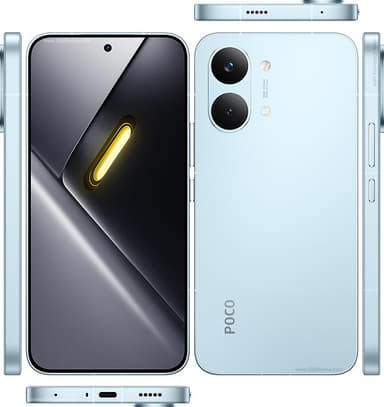
Compare offers from sellers near you

Xiaomi 14T vs Xiaomi Poco X8 Pro Max

Xiaomi Poco X8 Pro Max edges it for most people
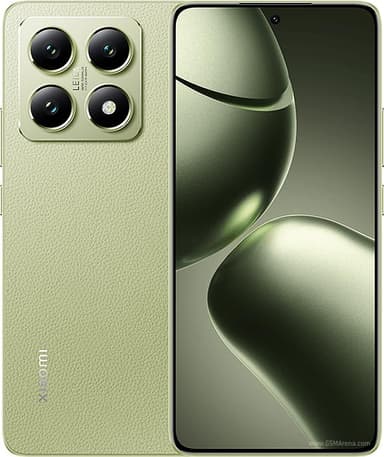
Xiaomi 14T

6.2/10

No price yet

Overall winnerXiaomi Poco X8 Pro Max

6.9/10

No price yet

Best for

  • GamingXiaomi Poco X8 Pro Max
  • Keeping it for yearsEither - too close to call

Head to head

  • Performance
    7.2
    8.4

    Xiaomi Poco X8 Pro Max has the faster chip: Mediatek Dimensity 9500s against Mediatek Dimensity 8300 Ultra.

  • Gaming
    7.5
    8.6

    Xiaomi Poco X8 Pro Max has the stronger graphics for games.

  • Battery life
    4.9
    –
  • Display
    6.8
    –
  • Camera
    6.3
    –
  • Durability
    3.8
    6.2

    Xiaomi Poco X8 Pro Max is ahead on durability: screen glass Corning Gorilla Glass 7i against Corning Gorilla Glass 5.

  • Longevity
    8.2
    6.3

    Xiaomi 14T should get software updates for about 3.8 more years, against about 2.3 for Xiaomi Poco X8 Pro Max.

  • Storage
    6.0
    –
  • Connectivity
    5.5
    6.2

    Xiaomi Poco X8 Pro Max is ahead on connectivity: bluetooth 6.0, A2DP, LE, aptX HD, LHDC 5, Auracast, ASHA against 5.4, A2DP, LE, LHDC.

  • Size and weight
    6.9
    –
  • Extras
    5.5
    3.8

    Xiaomi 14T is ahead on extras: speakers Yes, with stereo speakers against -20.9 LUFS (Excellent).

All specifications
Xiaomi 14T
Xiaomi Poco X8 Pro Max
General
Communication
Wi-Fi 802.11 a/b/g/n/ac/6e, dual-band, Wi-Fi Direct
–
Condition
–
Available. Released 2026, March 17
Model
2406APNFAG
2602BPC18G
Operating System
Android 14, upgradable to Android 15, HyperOS 2
–
Release Year
2024
–
Performance
CPU
Octa-core (1x3.35 GHz Cortex-A715 & 3x3.20 GHz Cortex-A715 & 4x2.20 GHz Cortex-A510)
Mediatek Dimensity 9500s (3 nm)
GPU
Mali G615-MC6
Immortalis-G925 MC11
Processor
Mediatek Dimensity 8300 Ultra (4 nm)
–
Display
Brightness
4000 nits
–
Display Type
AMOLED
1114 nits max brightness (measured)
Refresh Rate
144 Hz
–
Resolution
1220 x 2712 pixels
1280 x 2772 pixels, 19.5:9 ratio (~447 ppi density)
Screen Protection
Corning Gorilla Glass 5
Corning Gorilla Glass 7i
Screen Size
6.67 in
–
Camera
Front Camera
32 MP
–
Megapixels
50
–
Number of Cameras
1
–
Optical Image Stabilisation
Yes
–
Rear Camera
Triple 50 MP
–
Video Resolution
4K@24/30/60fps, 1080p@30/60/120/240/960fps, gyro-EIS, 10-bit Rec. 2020, HDR10+
4K@30/60fps, 1080p@30/60/120/240/960fps, gyro-EIS, HDR10+
Battery and power
Battery Capacity
5000 mAh
–
Charging Port
67W wired, PD3.0, 100% in 45 min
100W wired, 100W PPS, PD3.0, PPS, 50% in 24 min 27W reverse wired Bypass charging
Charging Wattage
67 W
–
Wireless Charging
No
–
Memory
RAM
12 GB
–
Storage
Expandable Storage
No
–
Storage Capacity
256 GB
–
Connectivity
2G
900 / 1800 / 1900
900 / 1800 / 1900
2G Bands
GSM 850 / 900 / 1800 / 1900
3G
850 / 900 / 1700(AWS) / 1900 / 2100
–
3G Bands
HSDPA 800 / 850 / 900 / 1700(AWS) / 1900 / 2100
HSDPA 850 / 900 / 1700(AWS) / 1900 / 2100
4G Bands
1, 2, 3, 4, 5, 7, 8, 12, 13, 17, 18, 19, 20, 26, 28, 32, 38, 40, 41, 42, 48, 66
1, 2, 3, 4, 5, 7, 8, 18, 19, 20, 26, 28, 38, 40, 41, 42, 48, 66
5G Bands
1, 2, 3, 5, 7, 8, 12, 20, 26, 28, 38, 40, 41, 48, 66, 77, 78 SA/NSA
1, 2, 3, 5, 7, 8, 20, 28, 38, 40, 41, 48, 66, 77, 78 SA/NSA/Sub6
Bluetooth
5.4, A2DP, LE, LHDC
6.0, A2DP, LE, aptX HD, LHDC 5, Auracast, ASHA
GPS
GPS (L1+L5), BDS (B1I+B1C+B2a), GALILEO (E1+E5a), NavIC (L5), GLONASS
–
Infrared Port
Yes
Yes
NFC
Yes (market/region dependent)
Network Technology
HSPA, LTE, 5G
HSPA, LTE, 5G
SIM Type
· Nano-SIM + eSIM · eSIM + eSIM · Nano-SIM + Nano-SIM
–
Wi-Fi
Wi-Fi 802.11 a/b/g/n/ac/6e, dual-band, Wi-Fi Direct
–
Sound
Loudspeaker
Yes, with stereo speakers
-20.9 LUFS (Excellent)
Ports
Headphone Jack
No
No
USB Type
USB Type-C 2.0, OTG
USB Type-C 2.0, OTG
Build and size
Build
Glass front (Gorilla Glass 5), plastic frame, glass back (Panda X)
Glass front (Gorilla Glass 7i), aluminum frame, glass-fiber reinforced plastic back
Dimensions
6.67 inches, 107.4 cm 2 (~89.1% screen-to-body ratio)
6.83 inches, 114.5 cm 2 (~90.3% screen-to-body ratio)
IP Rating
IP68
–
Thickness
7.8 mm
–
Weight
193 g
–
Features
FM Radio
No
No
Questions people ask

Which is better, Xiaomi 14T or Xiaomi Poco X8 Pro Max?

Xiaomi Poco X8 Pro Max edges it for most people. Xiaomi 14T wins on longevity and extras; Xiaomi Poco X8 Pro Max wins on performance, gaming, durability and connectivity.

Which is faster, Xiaomi 14T or Xiaomi Poco X8 Pro Max?

Xiaomi Poco X8 Pro Max has the faster chip: Mediatek Dimensity 9500s against Mediatek Dimensity 8300 Ultra.

Which is better for gaming, Xiaomi 14T or Xiaomi Poco X8 Pro Max?

Xiaomi Poco X8 Pro Max has the stronger graphics for games.

Which is tougher, Xiaomi 14T or Xiaomi Poco X8 Pro Max?

Xiaomi Poco X8 Pro Max is ahead on durability: screen glass Corning Gorilla Glass 7i against Corning Gorilla Glass 5.

Which will last more years, Xiaomi 14T or Xiaomi Poco X8 Pro Max?

Xiaomi 14T should get software updates for about 3.8 more years, against about 2.3 for Xiaomi Poco X8 Pro Max.

Which connects better, Xiaomi 14T or Xiaomi Poco X8 Pro Max?

Xiaomi Poco X8 Pro Max is ahead on connectivity: bluetooth 6.0, A2DP, LE, aptX HD, LHDC 5, Auracast, ASHA against 5.4, A2DP, LE, LHDC.

Which has more extras, Xiaomi 14T or Xiaomi Poco X8 Pro Max?

Xiaomi 14T is ahead on extras: speakers Yes, with stereo speakers against -20.9 LUFS (Excellent).

Which is newer, Xiaomi 14T or Xiaomi Poco X8 Pro Max?

Xiaomi Poco X8 Pro Max is the newer of the two, released March 2026.

Scores are out of 10 against products released in the last two years, worked out from published specs. Prices are averages of what sellers quoted.

Xiaomi 14T vs Xiaomi Poco X8 Pro Max: which is better? - Mutape